2026-09-19 · Mike Torres
Best Tile Roof Underlayment for Florida Homes in 2026
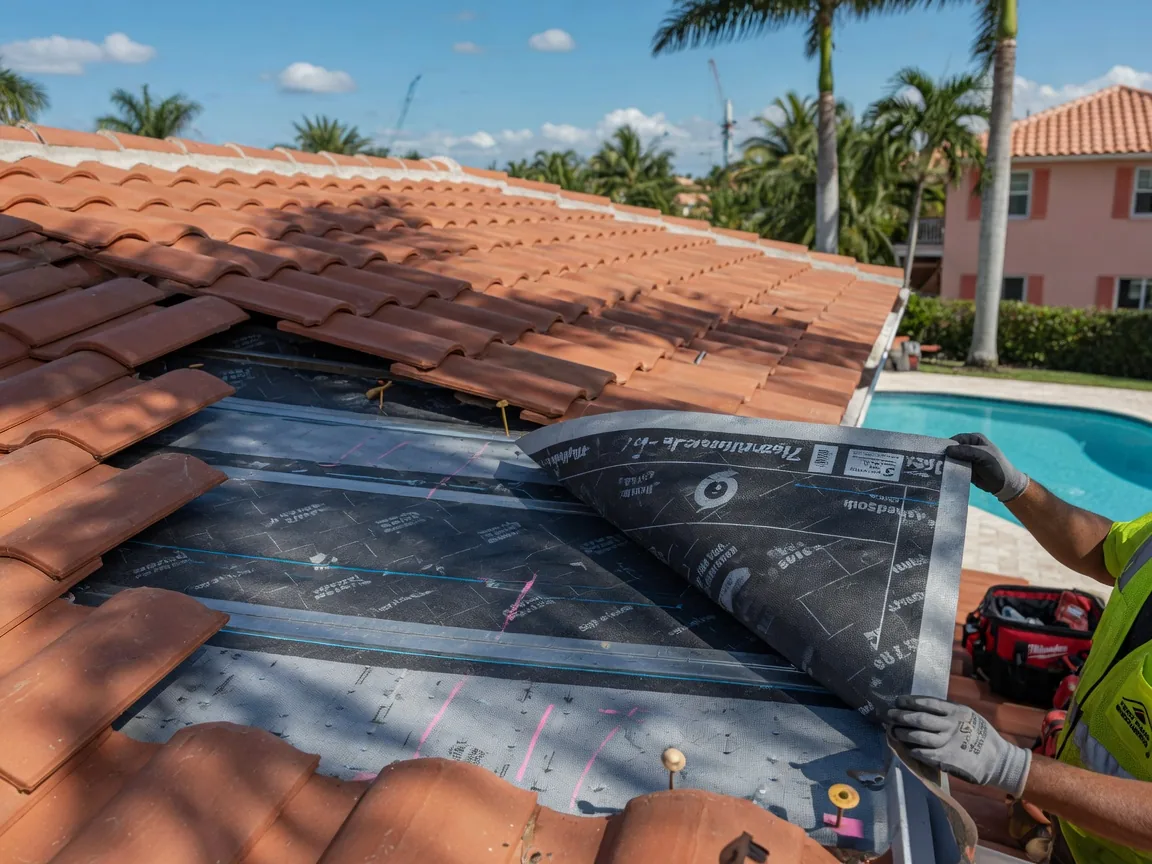
For Florida homes in 2026, the best tile roof underlayment combines a synthetic sheet rated to 240°F with self-adhered membrane applied at eaves, valleys, and penetrations. This setup handles the heat buildup under clay or concrete tiles while resisting wind-driven rain during hurricane season in Palm Beach County.
Climate Demands on Underlayment in West Palm Beach
West Palm Beach summers push roof deck temperatures past 200°F under tile, while hurricane season brings repeated wind-driven moisture. Homes in neighborhoods like El Cid, Flamingo Park, and Grandview Heights often sit on older decks that need underlayment capable of bridging minor movement without tearing. Synthetic products with woven polypropylene bases maintain integrity when humidity stays above 80% for weeks. In contrast, felt paper absorbs moisture and loses tensile strength faster near the Intracoastal in Downtown West Palm Beach and Roosevelt Estates. Self-adhered membranes at the first 6 feet of eaves prevent leaks when wind lifts tile edges during storms that track through Lake Worth and Boynton Beach.
Top Underlayment Choices for Tile Roofs
High-temperature synthetic underlayments from manufacturers such as Atlas and GAF provide 180-day UV exposure ratings and nail-sealability around tile fasteners. These sheets weigh 30–40 pounds per roll yet roll out flat on the irregular surfaces common to 1960s–1980s homes in Northwood. Pair them with 40-mil self-adhered membrane at valleys and around plumbing vents to meet Palm Beach County wind-load expectations. Avoid standard 15-pound felt on tile replacement projects because it compresses under foot traffic and fails to seal nail holes once temperatures exceed 140°F. Homeowners replacing roofs in Palm Beach Gardens or Jupiter report longer deck life when synthetic underlayment is used because it allows the roof to breathe while blocking liquid water.
Installation Steps That Protect Tile Systems
Start by inspecting decking for rot after removing old tile, especially on homes near Clematis Street where salt air accelerates corrosion of metal flashings. Roll out the synthetic underlayment parallel to the eaves with 4-inch overlaps, then fasten with cap nails every 12 inches along seams. Apply self-adhered membrane 6 feet up from the eaves and 3 feet on each side of valleys before installing the tile battens. In areas like the Palm Beach Zoo vicinity, crews add an extra course of membrane over ridge vents to handle the concentrated heat. This sequence keeps water out during the frequent afternoon thunderstorms that hit West Palm Beach from June through October.
How Underlayment Affects Long-Term Roof Replacement Costs
Choosing the right underlayment during roof replacement reduces future roof repair calls after storms. Tile roofs in Palm Beach County typically last 30–50 years when the underlayment layer stays intact; once it fails, moisture reaches the deck and forces full replacement sooner. The added material cost of synthetic plus membrane runs $0.80–$1.20 per square foot but extends service life enough to offset the expense over one hurricane cycle. See details in Hurricane-Rated Roofing and Palm Beach County Wind Codes for code minimums that apply to homes in Royal Palm Beach and Wellington.
Contact the team at 5335 N Military Trl, West Palm Beach, FL 33407 for a site visit. Hours are Mon-Fri 8am-6pm and Sat 9am-2pm.